
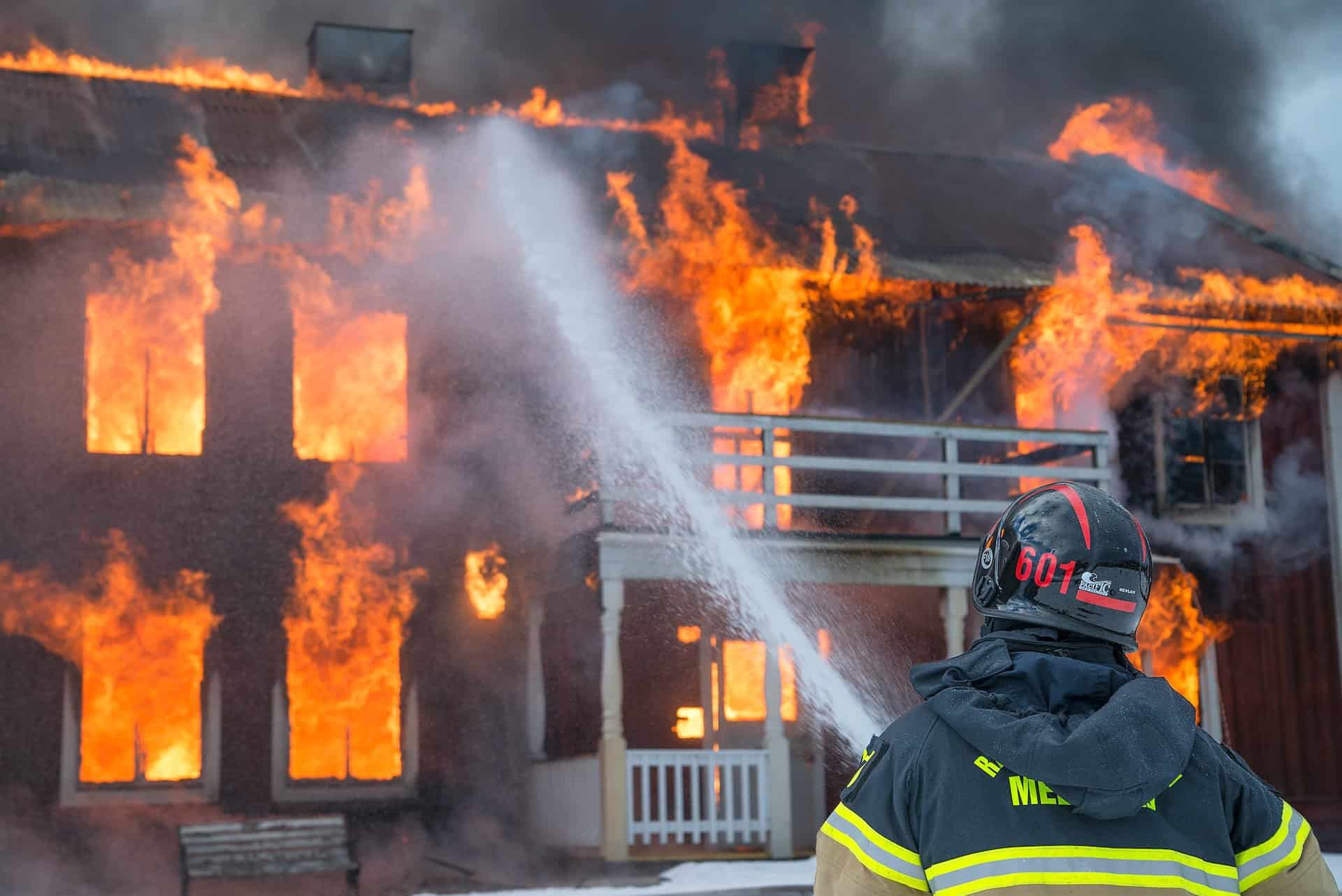
You have probably read it in a news article: ‘Home catches fire due to solar panel installation’. Beyond the fact that this is obviously terrible news for the residents, finding a cause is often a complex job. Do the solar panels catch fire? Or is it happening in the residents’ meter box due to overloading? In this blog, we answer the questions: how can solar panels catch fire and what can be done to prevent it?
Can solar panels cause fires?
In short, there is never a precise cause of fire caused by solar panels. However, we can say that the most common cause is overheating of the solar cells after failure.
Let’s start at the beginning; solar panels. They are composed mostly of glass, silicon and aluminum. To be brief, solar panels do not catch fire spontaneously. They are resistant to exceptionally high temperatures and, at most, will yield less efficiency or break down. Because of this, we can almost certainly rule out the possibility that the solar panels themselves could be the cause of a fire.
So how do solar panels catch fire? Usually the panels catch fire due to poor connections of plugs used to connect the panels. The danger here lies in poor assembly of electrical connections. The plugs that connect the solar panels and extension cables together on the roof should be securely connected to each other using MC4 connectors. Solar panels produce power that we cannot yet use, called direct current. An inverter must first convert this power into usable alternating current before consumers can use it at home. Direct current has the characteristic that once it is in motion through the cable system, it cannot be stopped quickly. When the circuit is suddenly broken, due to a crack or defect in the cables, for example, the current shoots out of the cables, so to speak, and the current collides with each other. This can cause sparks where the temperature can rise so high that surrounding materials also catch fire.
How common is fire caused by solar panels?
According to figures from the Netherlands Institute of Public Safety, fires involving solar panels are infrequent. In recent years, the average throughout the Netherlands is only 30 to 3 fires per year. Keep in mind that such a fire need not have originated from the solar panels themselves. So compared to the two million Dutch homes with solar panels, this is a relatively low percentage.
The impact of a microinverter on fire hazard
Microinverters work day and night to convert direct current to usable alternating current. As with all electronic devices, the inverter can malfunction or overload. So in theory, this is always a risk when buying solar panels. Especially if the inverter is attached in a poorly insulated meter box, the risk of fire is increased.
Nowadays, most inverters have a metal casing that can withstand high temperatures. Therefore, should a fire occur in an inverter, it will not easily get beyond the metal casing. In the exceptional cases where you still have an inverter in your home with a plastic housing, we recommend that you have it replaced. We recommend purchasing micro formers with solar panels to reduce the risk of fire. Contact us to get good advice on the right inverter for your home.
How do you prevent fire in solar panels?
The best tip we can give you when it comes to solar panel fire prevention is: don’t do it yourself! Many people who are handy with electricity and installations underestimate the work involved in installing solar panels. On average, there are 12 solar panels on a Dutch roof, which together generate a voltage of 400 volts and a power of 4000 watts. This is a lot of voltage. As a result, every connection must be fastened with extreme precision; after all, a mistake is in a small corner. Neglect of solar panels can also help fire spread faster. Thus, annual maintenance of solar panels is very important.
Choose the right solar panel system
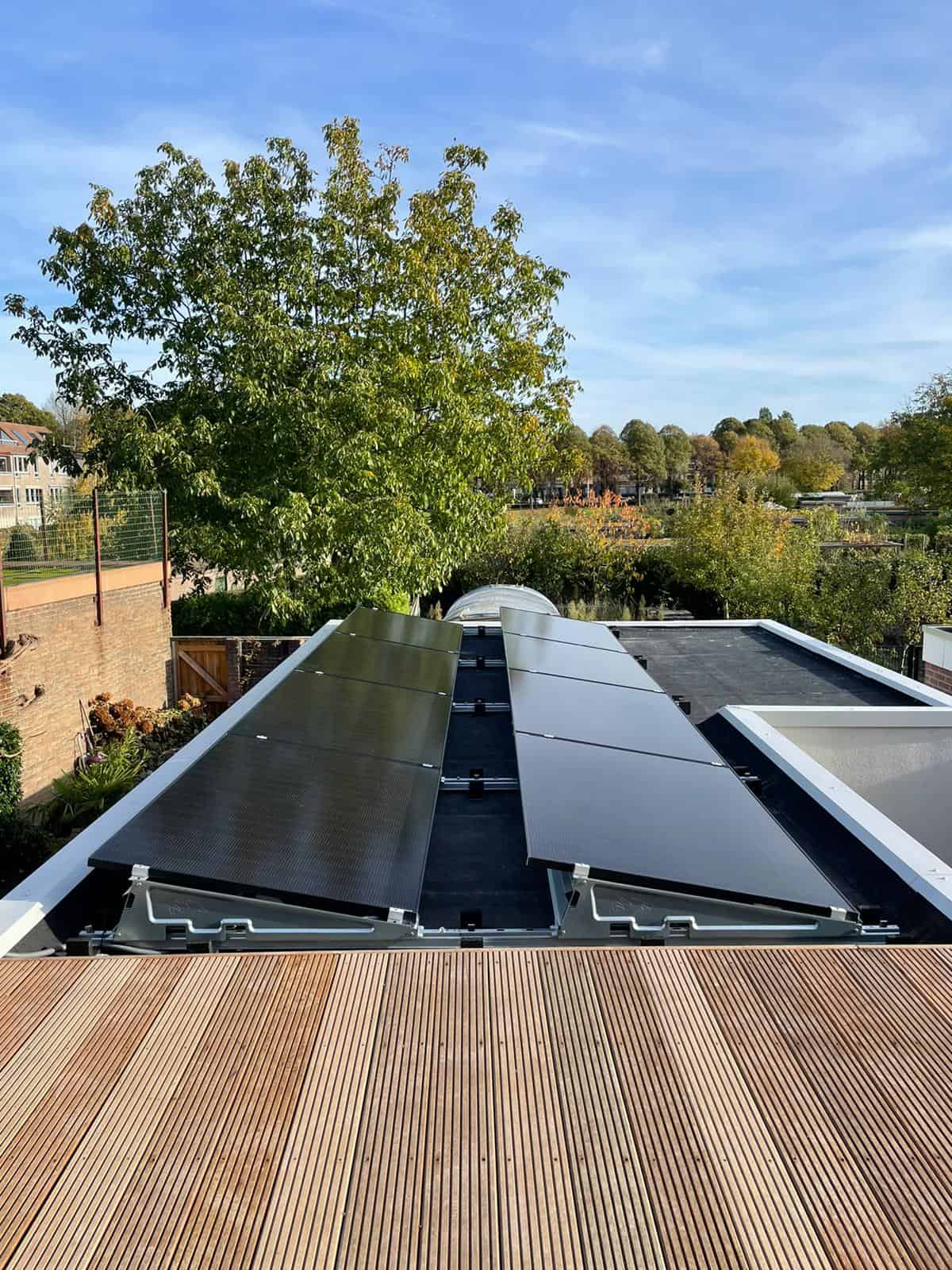
In preventing fire hazards, the right solar panel system can also be considered. For example, in an on-roof system, the panels are on top of the roof tiles. With a system like this, risk of fire is tremendously small, even with poor installation. When we talk about in-roof solar panels, poor installation does lead to higher fire risk. This risk is higher because the solar panels are installed in the roof as a replacement for the roof tiles. Here the material must be fire-resistant and there should be sufficient space between the panels.
Micro inverters
When it comes to DC fire in solar panels, micro-inverters are the panacea! This little device works basically the same as an inverter in your meter box and is placed behind each solar panel. The micro-inverter immediately converts the direct current produced per panel into usable alternating current. If something does go wrong, the residual current device in the meter box switches off immediately and all voltage at the installation on the roof is cut off. This eliminates the risk of fire when using micro-inverters.
To avoid mistakes, The Sustainable Boys are happy to help you out! During a no-obligation consultation, we will be happy to advise you of the best choice for your situation. We work exclusively with Tier1 hallmark products from an automated production consisting of at least 1000 FTEs. This allows us to guarantee risk exclusion!