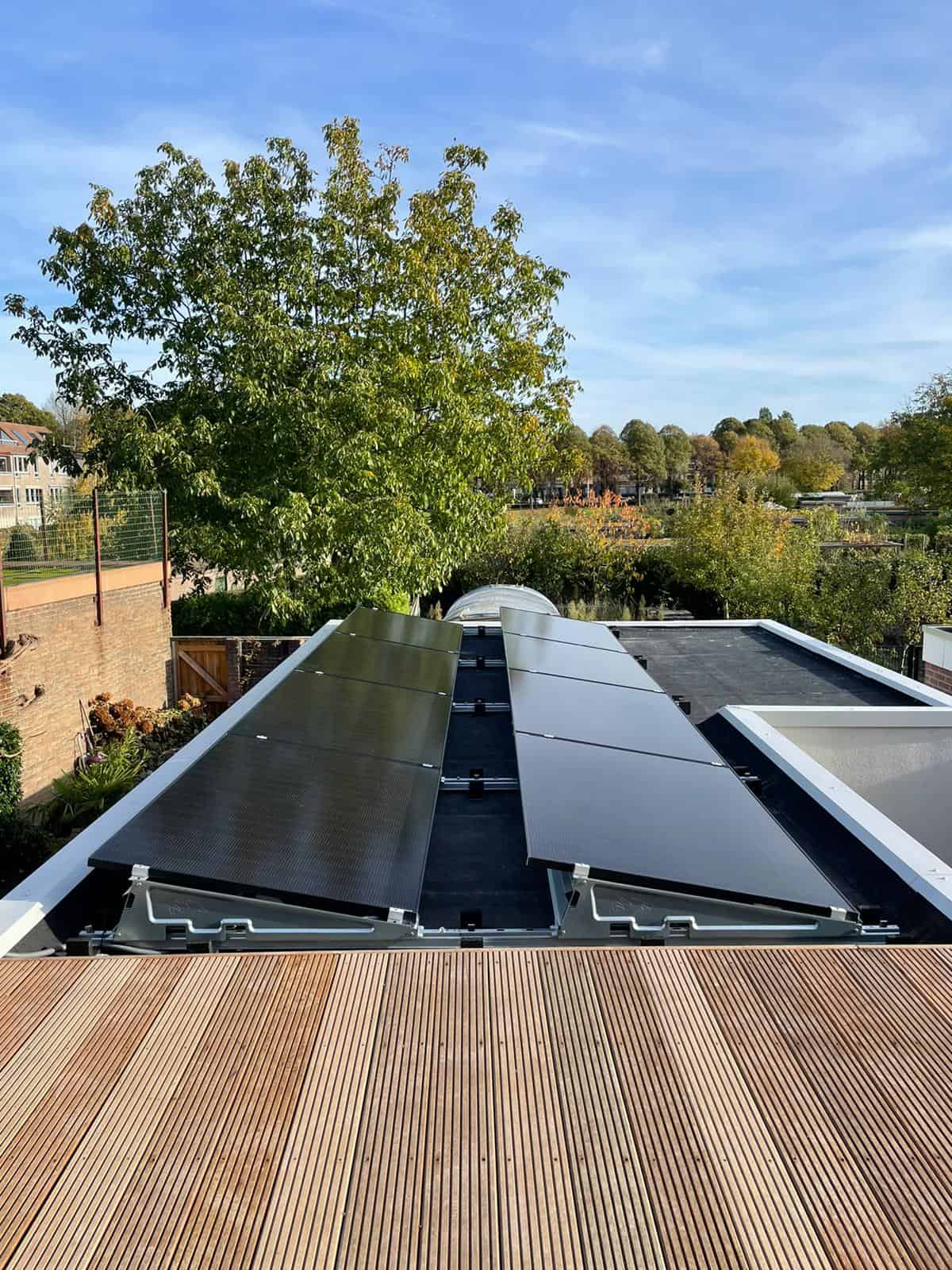

There are plenty of situations where your solar panels are in the shade. Perhaps the chimney is just in the way for the sun to provide enough sunlight, or the neighbor’s tree is growing just a little faster than expected. Even in the winter months, early mornings and late evenings, your solar panels will sometimes face shade. But does it really matter if your solar panels are (partly) in the shade? Do you still have sufficient energy output when your solar panels are in the shade? These are all questions that probably run through your head if you have recently purchased solar panels and see that they are not completely covered by sunlight. Therefore, in this blog we will answer the question, “do solar panels work in the shade?”.
This is how solar panels work in the shade
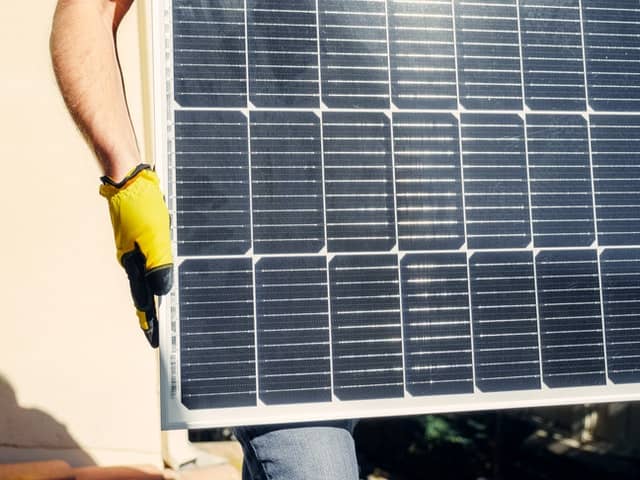
To get straight to the answer: every solar panel reacts differently to shade. We will explain this in more detail by naming a few different panels and how they work. However, it is safe to say that shadow on a solar panel lowers the output of the entire solar array. Especially “hard shade,” such as shade from a dormer or tree, affects the yield of a solar panel. To understand this influence of shade on solar panels, it is important to understand how solar cells work. Normally, a standard solar panel consists of 60 interconnected solar cells. The cells capture sunlight and then convert this energy into electricity. When shade reduces this amount of light, the cells under shade logically produce less electricity. This affects the energy to be received from the solar panels. Indeed, when one cell allows less current to pass through, the other cells are also restricted.
Different types of solar panels and their operation in the shade
Does a standard solar panel experience shade on a single cell? Then the resistance in this cell increases and the current is no longer able to flow properly. Since the other cells do get covered with sun, all the current will be squeezed through this cell and it can become very hot (hot spot). This can lead to a broken cell. But fortunately, the bypass diode exists today. This can turn off the cell if there is too much resistance, so that the current no longer flows through the cell, but through the bypass diode.
Solutions to reduce the impact of shade
Optimizers
As we just explained, most solar panels work in series. This creates the disadvantage of reducing the yield of the entire system. However, there is a solution to this. Namely, it is possible for an experienced solar panel installer to connect the panels in parallel. This way, not all the panels are dependent on the weakest cell. How is this realized? By using optimizers. Optimizers are small inverters that are mounted on the back of a solar panel. They ensure that each individual panel operates continuously at the optimal voltage. This allows the solar panels in shadow to still contribute to the total output, while the panels in sunlight perform at their maximum.
Inverter with MPP trackers
Another solution is to use inverters that have an MPP tracker. It is a system that generates as much energy as possible. Depending on the set voltage, the shaded cells can participate or be skipped. This allows the rest of the panels to generate more power. The inverter provides a higher yield during shady moments and thus the total, annual yield.
Standard solar panels with 60 cells and 3 diodes
However, it is too expensive and impractical to provide each cell with a bypass diode. Therefore, in a standard solar panel with 60 cells, there are usually three. That does mean, however, that should a leaf fall on one cell, for example, 20 cells are immediately disabled. That’s 33% loss of solar energy.
Solar panels with cells with copper base
Some solar panels have Maxeon cells. These have a copper base with the silicon on top. These solar panels work better in the shade because their copper base plates make them less susceptible to hot spots. Therefore, no diode is needed to protect the cell. Not only do Sunpower cells work better in the shade than standard solar panels, they also work better in cloudy and low-light conditions.
Thin film solar panels
As of 2019, thin film solar panels are not often used. Still, they are interesting because they react very differently to shade than other solar panels. Thin film solar panels are composed of elongated, parallel cells that run across the panel from bottom to top. Because of the large surface area of the cells combined with the low current ratings, a thin film solar panel usually does not need diodes. As a result, when shaded, only the cells that are actually in the shade are affected. Shade has less of an impact on these solar panels for this reason. Still, it can be useful to use optimizers.
So the conclusion is that all solar panels work differently in the shade. This is something to consider when buying your solar panels in Limburg. On our website you can compare different types of solar panels. Want to know which solar panels work best in the shade? Then contact us. We will be happy to help you find and install the best solar panels.