
We all know by now that if we want to live more sustainably, solar panels are a good investment. After all, this investment is not only good for the environment, but can also help lower your energy costs. However, not all solar panels are equally efficient. Several factors, such as the type of panel, placement and weather conditions, determine how high the efficiency of your solar panels will be. In this blog, we will tell you which solar panels have the highest efficiency. In addition, we will give you useful tips to get the most out of your solar panels.
Low or high efficiency solar panels?
Solar panels work on the basis of solar cells that convert sunlight into electricity. The more efficient a solar panel is, the more electricity it can produce with the same amount of sunlight. The efficiency of a solar panel is expressed as the percentage of sunlight that is actually converted into usable energy. For solar panels, this efficiency averages between 15% and 22%. How low or high the efficiency of solar panels is depends largely on the type of solar cell used in the panel.
Types of solar panels and their efficiency
There are three main types of solar panels on the market: monocrystalline, polycrystalline and thin film solar panels. Each type has its own advantages and disadvantages in terms of efficiency, cost and application. We are happy to tell you more about each type of solar panel.
Monocrystalline solar panels
Monocrystalline solar panels are known as high efficiency solar panels with a long lifespan. These panels are made of a single crystalline silicon structure, which provides a more efficient conversion of sunlight to electricity. The efficiency of monocrystalline solar panels is usually between 18% and 22%. This makes them ideal for smaller roofs, where it is important to get as much energy as possible from a limited area.
Polycrystalline solar panels
Polycrystalline solar panels are made of multiple silicon crystals, leading to a lower efficiency than monocrystalline panels. The efficiency is typically between 15% and 18%. These panels are often cheaper. This makes them attractive for larger areas where efficiency is less important than the total amount of energy generated. Despite their lower efficiency, polycrystalline panels are still a popular choice, mainly because of their value for money.
Thin film solar panels
Thin film solar panels are more flexible and lighter than their crystalline counterparts, but have a lower efficiency. These panels achieve efficiencies of about 10% to 12%. Thin film solar panels are especially useful in specific situations, such as on large industrial roofs or where weight is an important consideration. They are less suitable for residential buildings, especially if you are aiming for high efficiency from your solar panels.
Factors affecting returns
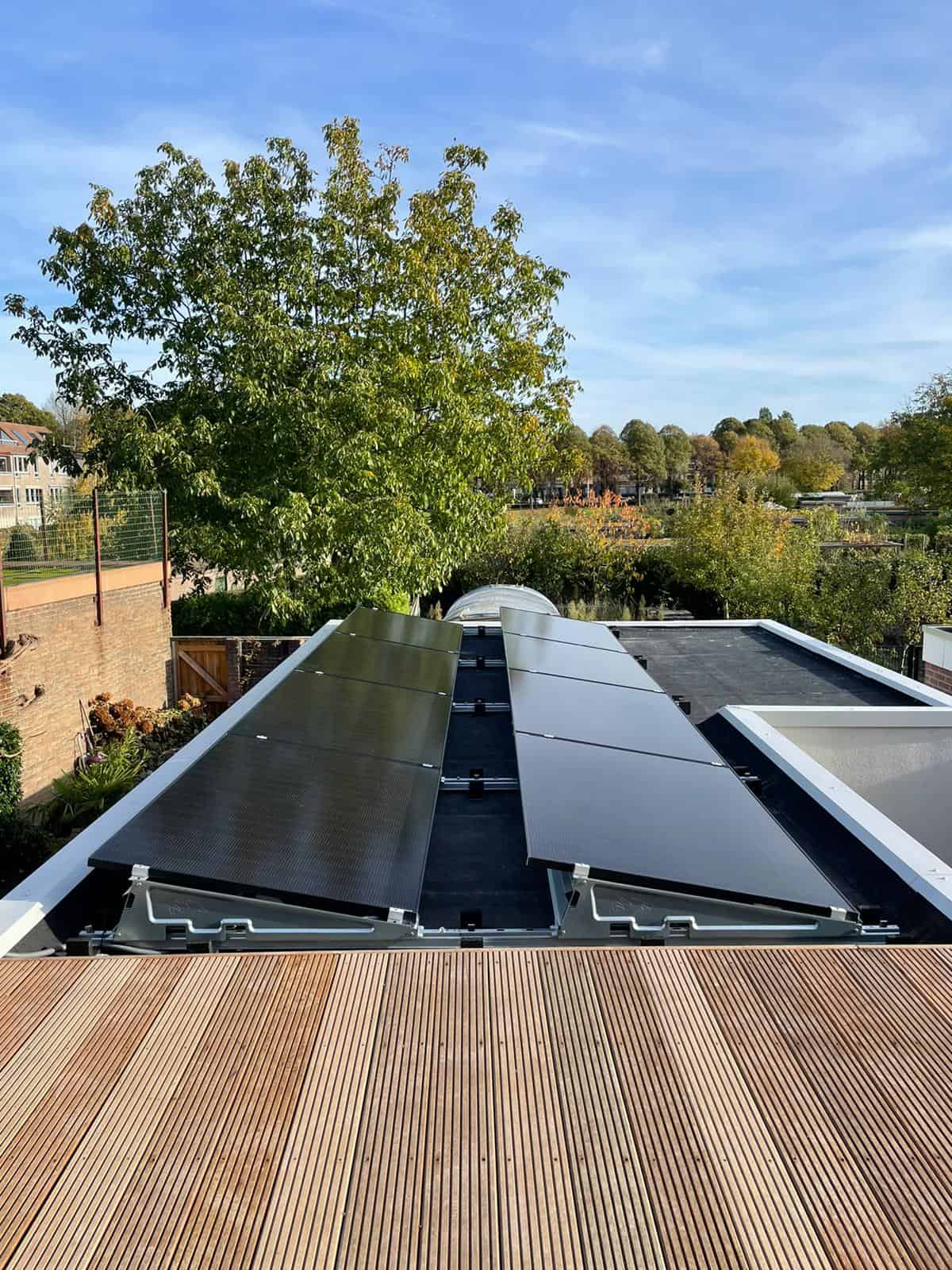
How high the efficiency of solar panels is affected by several factors. These include the slope angle and orientation of your roof, the amount of shade, geographic location and weather conditions. The more optimal the placement of the panels, the higher the efficiency will be.
- Roof orientation and inclination: solar panels perform best on a roof that faces south and has an angle of inclination of 30 to 45 degrees. Panels facing other directions or at an unfavorable angle do not perform as well. Read more about the ideal inclination angle of solar panels here.
- Shade: shade from trees, chimneys or other buildings can drastically reduce the efficiency of solar panels. It is important to consider the shadow patterns on your roof during the year.
- Weather conditions: in the Netherlands, where the sun does not always shine fully, it is important to choose solar panels that perform well in diffuse light (light scattered by clouds).
What are high-efficiency solar panels?
So when looking at high-efficiency solar panels, monocrystalline panels are the best choice. Their efficient conversion of sunlight into electricity and high energy density make them great for situations where space is limited. Although they are often more expensive to purchase, you can recoup the higher investment more quickly because of the higher energy yield over the life of the panels. However, for those who have a larger roof area and care less about efficiency, polycrystalline solar panels can also be a good choice. These panels offer a good balance between cost and energy yield. As a result, they remain a popular choice for both residential and commercial installations.
Tips for high efficiency from your solar panels
Do you want to make sure your solar panels achieve the highest efficiency? Here are some tips you can apply:
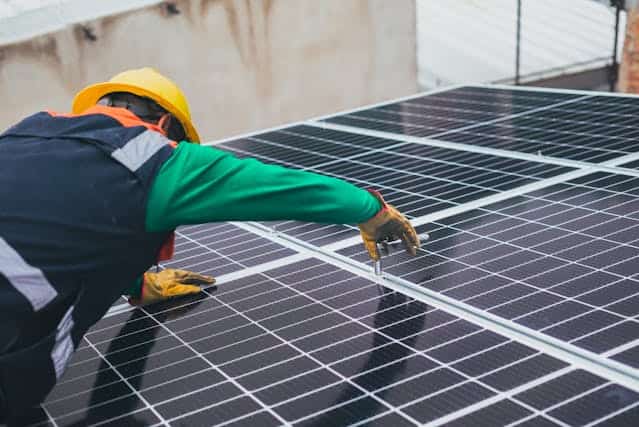
- Ensure optimal placement: make sure your solar panels are positioned at the correct angle and direction to capture maximum sunlight. When installing them, get advice from a specialist to ensure that your roof is used to its full potential. Read here why installing solar panels facing west may be of interest to you.
- Avoid shade: shade can greatly reduce the efficiency of solar panels. When installing, consider trees or other objects that can cast shade. A specialist can perform a shade analysis to determine the best placement.
- Maintain your solar panels regularly: solar panels require minimal maintenance, but it is important to keep them clean and check for dirt or dust that can affect efficiency. An annual inspection is often enough to keep the panels in optimal condition.
- Consider a solar inverter with optimizers: Optimizers can help increase solar panel efficiency by optimizing each panel individually.
- Use a monitoring system: a monitoring system allows you to track the performance of your solar panels in real time. This helps to detect and resolve any problems quickly, preserving the efficiency of your system.
So choosing high-efficiency solar panels is important if you want to get the most out of your investment. Especially now that net-metering is becoming a bigger and bigger issue. It is smart to get proper information from a solar panel installation specialist. That way you can be sure that you are choosing the right one. Good luck with choosing!